Download
 Browser
A good tileset is a small set of readable pieces that seam cleanly. Start with one ground tile, prove it repeats, then grow the set — the same authored-room approach you see in games like Cave Story and Super Metroid.
What you'll make
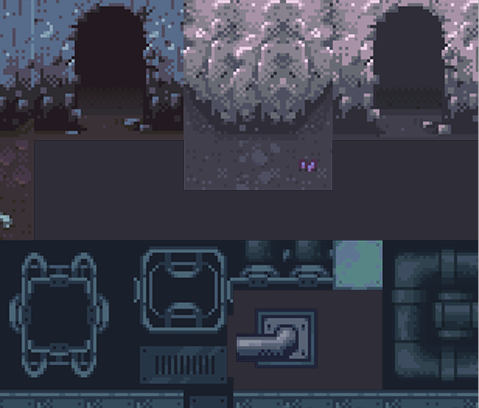
A starter tileset (ground, wall, accent) tested with Repeat Tiles and stamped into a tiny room with Map Builder.

Steps
- Draw one tile on a grid-sized layer (16×16 is a solid start).
- Select the tile and open Repeat Tiles to check seams.
- Fix edge pixels until the pattern tiles cleanly left-right and up-down.
- Add the tile to Map Builder (
T) under a category. - Paint a test room with the Brush tool (
B). - Add one wall tile and one accent prop — keep the palette shared.

Tips
- Test seams early — fixing a tile after a whole map is painted is slower.
- Keep solid vs breakable tiles visually distinct before you add mechanics.
- See Repeat Tile Mode and Build Maps Quickly.